
The Nature of Food
Food is on of the universal substance required for life. According to the theory of TCM it is viewed more differentiated and accessible once we understand the principle behind.
from the perspective of nutrition we divide food as carbohydrates, sugars, proteins, lipids, fiber and vitamins. These are important to know for your daily intake of food. However it quickly gets very complex when we take into account the anabolism and catabolism of these substances. Where is the uptake in the digestive system? how is the delivery to the liver? interactions and synergies?
In TCM we categorize food differently. We divide the foods into 5 natures and 5 flavors.
5 Natures
- Hot
- warm
- Neutral
- Cool
- Cold
5 Flavors
- Sour
- spicy/pungent
- Sweet
- bitter
- salty
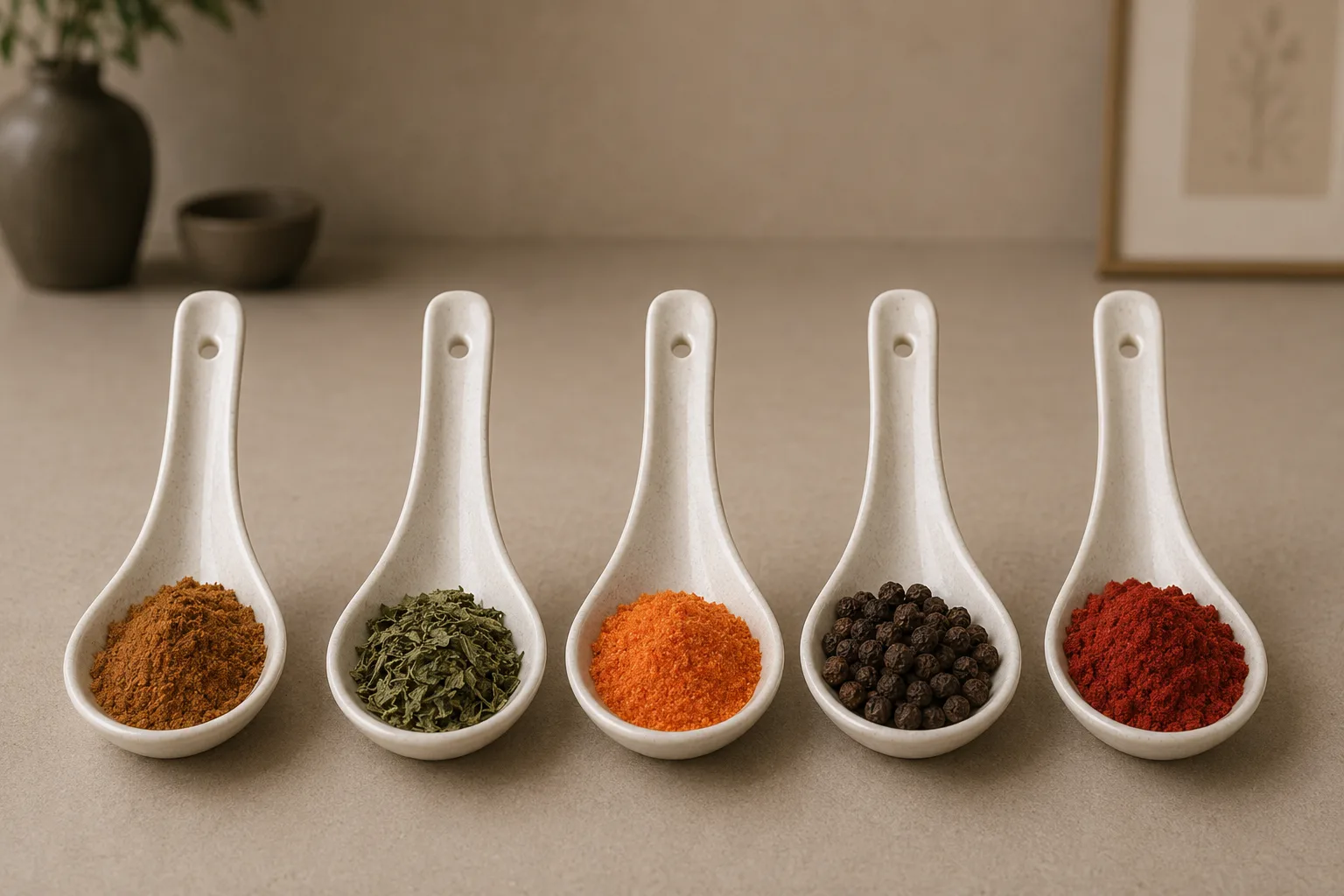
5 Natures
Generally, food that has cooling or cold properties contains a lot of Yin.
Because Yin and Yang are both equal and opposite, foods with warming or hot natures tend to have Yang energy. Neutral foods are somewhere in the middle of Yin and Yang and are balancing.
As a TCM doctor the combination of different foods and herbs is used as treatment to bring balance and harmony to patients. The aim of TCM is to maintain physical and mental equilibrium. Disorders and illnesses can for example be caused by excess heat(yang), excess cold(yin) that causes the body and mind to become off balance. As part of treatments it can be recommended to avoid certain foods and herbs and to eat others to restore health.
According to TCM we have a body constitution related to one of the 5 temperatures. This is never fixed and it will fluctuate during our lives. To keep ourselves healthy all year, it’s important to know your own nature and eat the appropriate foods. For example, if you have a cold or cool nature you should try to eat more warming and neutral foods while keeping cooling foods to a minimum.
This is related to our personal constitution and current health.
However, there is a more generalized way of looking at this, that is at first very counter-intuitive but will makes sense when you take a few minutes to think about it.
As this classical Chinese proverb describes:
“冬吃萝卜 夏吃姜”
“Eat white radish in winter and fresh ginger in summer”
The white radish is cold in nature and therefor helps the body to cool and tonify Yin.
Fresh ginger is hot in nature and therefor helps the body to warm and tonify Yang. Fresh ginger will make you sweat if you eat a large amount.
This is an example of the theory of Yin Yang: In winter there is an abundance of Yin and a deficiency of Yang and vice-versa in summer there is an abundance of Yang and a deficiency of Yin.
You might think this is a somewhat upside-down idea to eating cold foods in winter and hot foods in summer. When I grew up, I would definitely felt the winter. Feeling cold, maybe I had a cold, and I wanted to warm up. So, what did I do? I made myself a tea with ginger and I felt this warmth and heat inside of my body.
But according to Chinese Medicine theory, this is wrong. To understand why, we need to return to the theory of Yin Yang. As mentioned in winter there is an abundance of Yin and there is a lack of Yang. In the summer, there is abundance of Yang and in the winter, there is a lack of Yang, because in winter the environment doesn’t have yang, we can’t tap into it and get it into our bodies.
Why should we not eat hot nature food in the winter? If we eat a lot of ginger or hot nature foods then we will feel very hot and start to sweat. When you sweat the sweat brings out the Yang and expels it from your body. And in the winter, as mentioned, there is a deep lack of Yang in the environment so we have to try to preserve our Yang as much as we can during winter.
This is why, during the cold season, we should try and avoid hot nature foods. We should try and eat more cold natural food to preserve our Qi inside of our body. In the summer, vice-versa: there is a lack of Yin and an abundance of Yang so, in the summer it’s okay to eat hot nature foods because you have excess of Yang, and by eating hot nature foods you will induce sweating and help your body to expel the excess Yang you have in your body.
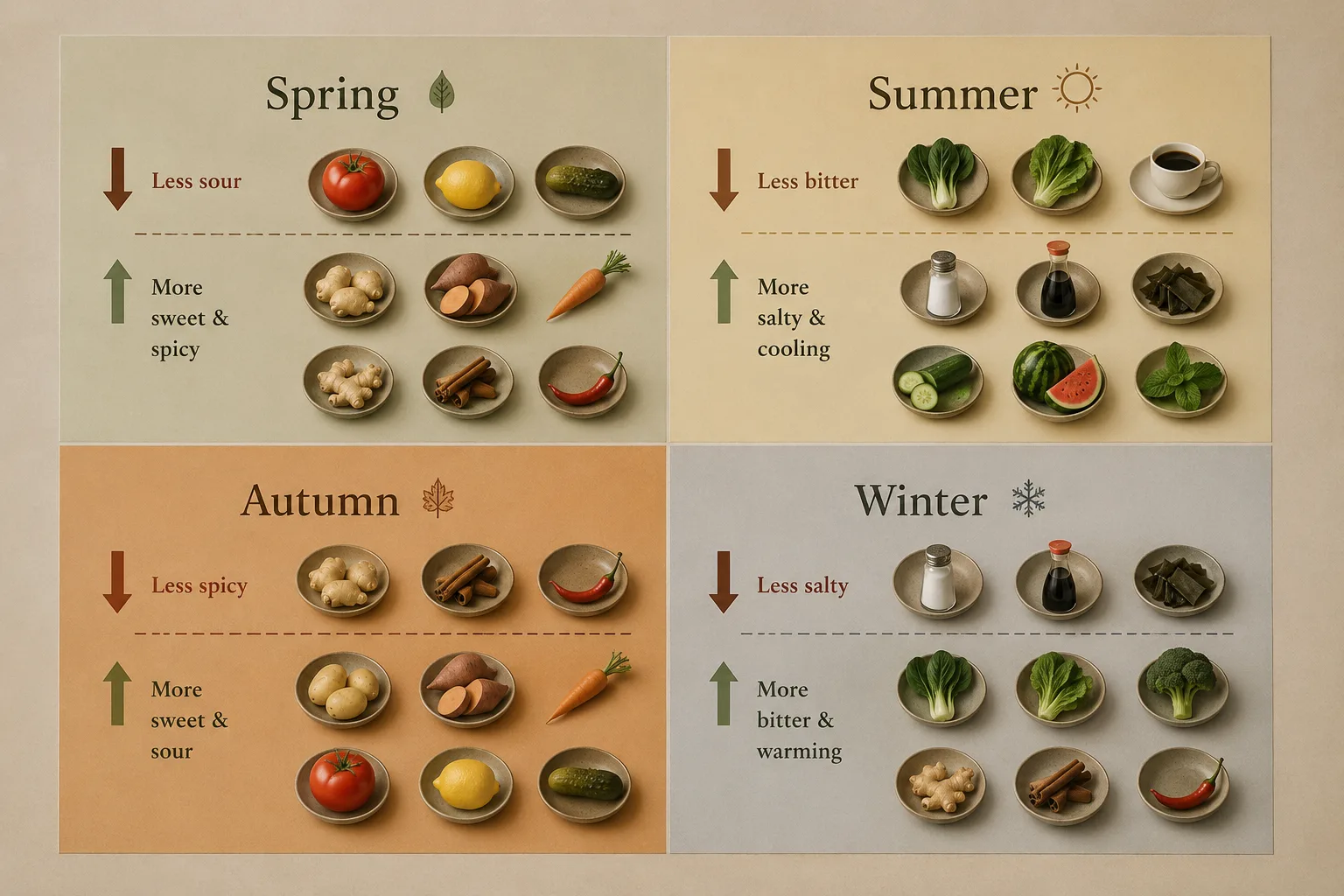
Cold natured foods
Bamboo shoot, chrysanthemum, bitter gourd, lotus root, water chestnut, root of kudzu vine, wild rice stem, angled luffa, sugar cane, tomato, watermelon, banana, pomelo, grapefruit, persimmon, mulberry, star fruit, preserved jellyfish, seaweed, kelp, cuttlefish, crabs, sea clams, snails, pig’s bone marrow, sprouts, water spinach, watercress, lettuces, arrowhead, salt and soya sauce.
Cool natured foods
Millet, barley, wheat, buckwheat, coix seed, eggplant, cucumber, wax gourd, loofah, Chinese radish, lettuce root, celery, peppermint, broccoli, cauliflower, leaf mustard, spinach, Peking cabbage, Chinese cabbage, amaranth, Indian lettuce, lily bulb, pea, mung bean, pears, muskmelon, apple, pineapple, coconut, strawberry, orange, tangerine, loquat fruit, mango, papaya, water caltrop, tea leaf, bean curb, mushrooms, lily flower, duck egg, egg white, pig skin, rabbit meat, conch, frogs, soybean milk, sesame oil, cream, yogurt and cheese.
Neutral natured foods
Round-grained rice, corn, taro, sweet potato, potato, turnips, carrot, cabbage, radish leaf, beetroot, fuzzy melon, soybeans, adzuki beans, peanut, cashew nut, pistachio nut, lotus seed, black sesame, sunflower seed, plums, fig, grapes, lemon, olives, white fungus, black fungus, shiitake mushroom, sea shrimps, loach, pork, duck, goose, oyster, beef, quail, sea eels, egg yolk, quail egg, royal jelly honey, milk, rock sugar and sugar.
Warm natured foods
Coriander, Chinese chives, onion, leeks, green onion, asparagus, sweet peppers, sword bean, spearmint, Garland chrysanthemum, pomegranate, apricot, peach, cherry, litchi, longan fruit, raspberry, chestnut, pumpkin, glutinous rice, dates, walnut, pine nut, mussels, fresh water eels, sea cucumber, carps, abalone, hairtail, lobster, fresh water shrimps, chicken, mutton, sparrow, pig’s liver, ham, goat milk, goose egg, sparrow egg, maltose, brown sugar, cumin, clove, fennel, garlic, ginger (fresh), dill seed, nutmeg, rosemary, star anise, Sichuan peppercorn, sweet basil, sword bean, tobacco, coffee, vinegar, wine, vegetable oil, rose bud, osmanthus flowers and jasmine.
Hot natured foods
Black pepper, cinnamon, ginger(dried), chili pepper, avocado, blue cheese, lamb meat, deer meat, peanuts, cocoa, chocolate, Brussels sprout, and mustard seed.
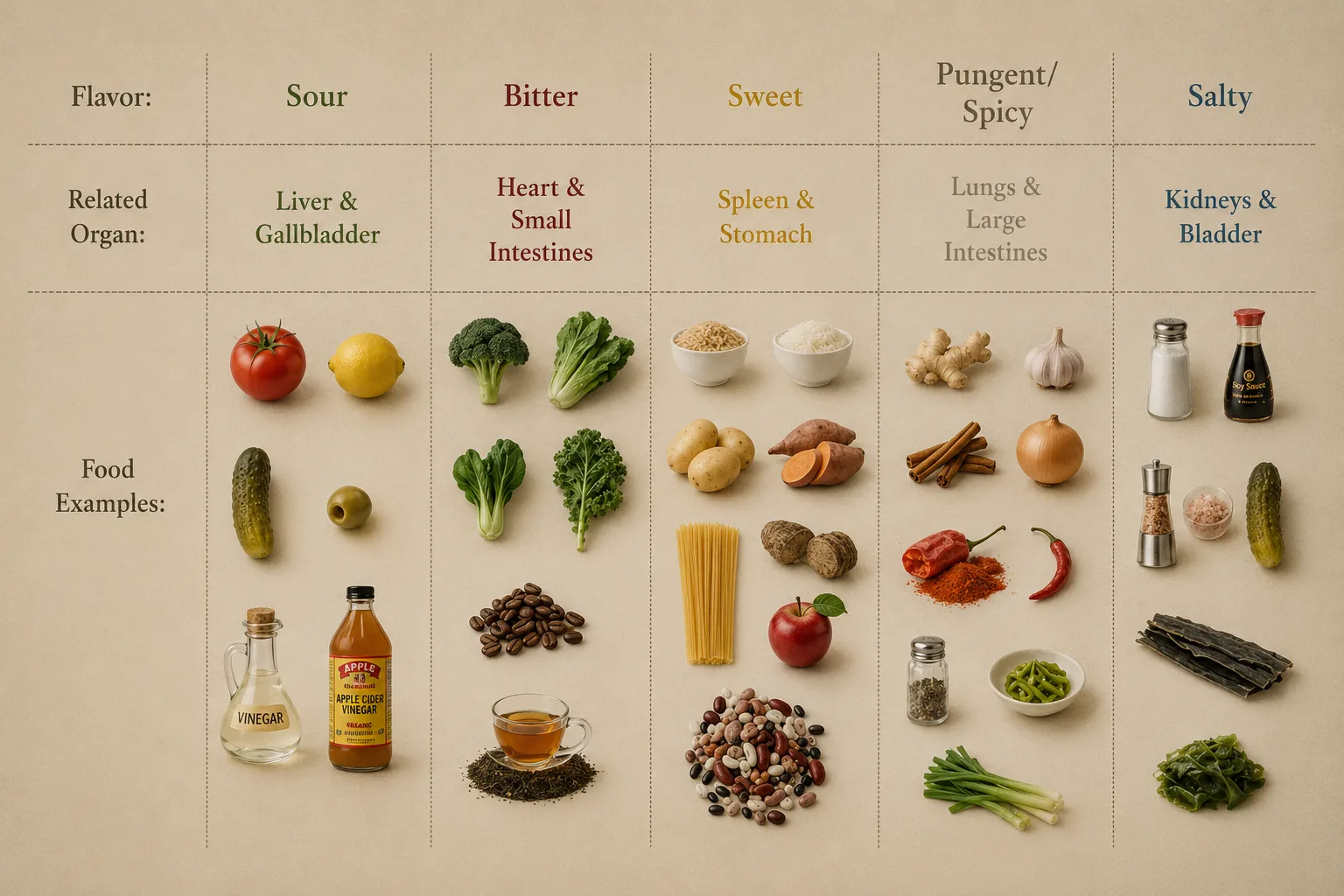
5 Flavors
The 5 flavors can be easier understood as the flavor of food, in general, is very distinguishable for all of us.
However, the implications of the foods and their nature require a slight amount of knowledge to understand how it can be used to our benefits. And maybe more important to know how it can help us if we feel ill or just uncomfortable.
The 5 flavors are;
Sweet flavours
These are considered to be Yang in energy and warming in nature. They tend to be expansive, and have an affinity to Earth and they can benefit digestion. But on the contrary a diet that has too much sweetness will damage the Spleen and digestion. This will lead to Dampness and Phlegm in the body. This can enhance the development of excess weight, mucoid deposits in your arteries, cysts or uterine fibroids, candida, skin eruptions, cysts, acne and edema. Too much sweet foods can also damage the Kidney Qi and cause hair loss, infertility among others. Many root vegetables, grains and meats are sweet and are either warm or neutral in nature. So, moderation is usually important when eating these foods.
Sour flavours
Are Yin in energy with a cooling nature and tend to be astringing and contracting. Sour flavor is related to wood and the Liver and Gall bladder. Excess sour diet can cause decreased metabolism and lessen the body’s imune system. Even the astringing feature of sour foods (like chewing on a green apple) helps the body in retaining water it’s not a good idea to drink lemon water when you have cold, flu. A better advice is to drink your hot water with a warm natured herb like ginger and/or garlic to promote sweating.
Pungent/Spicy flavours
These are Yang foods, and they disperse and direct Qi upwards and outwards. These food are often warming. These foods can promote sweating and this will benefits the Lungs. Pungent an spicy foods also help to clear mucous in the Lungs and Large Intestine. They help break up Qi and Blood Stagnation. When eaten in excess they will lead to dryness, especially of the Lung and Stomach which has big complications on the imune system.
Although they’re often warming these foods can also be cold. Pungent & warm foods include ginger, peppers, chilli, onions, garlic and many cooking spices (e.g cloves, cayenne, ginger root). Pungent & cold foods include peppermint, radish, watercress and cabbage.
Salty flavours
They are Yin in nature and their direction is inward and descend, and they’re cooling and moistening. They have an affinity with the Kidney, and can help to soften masses, nodules and stool. They can help to improve digestion and detoxify the body. Examples of salty flavoured foods are: salt, kelp and other seaweeds, seafood, fermented soy products, barley & millet and parsley.
Excess salt can worsen Dampness, disrupt fluid metabolism and damage the Blood and bones. As seen in clinic most people with high blood pressure, edema, lethargy and weight issues will have issues with high salt intake through their diet.
Bitter flavours
These are Yin, drying and descending, and can suplement the Heart and Small Intestine. They are usually cooling so they can help to clear heat from the body. Bitter flavor can also assist the Spleen and Stomach with their flow of Qi.
Bitter foods can help to dry Dampness. In addition bitter foods act to clear Heat from the Heart and the Liver. Bitter foods include coffee, tea, oats, rye, lettuce, broccoli, bitter melon, alphalfa, bamboo and dandelion. Dandelion is a great addition to the diet as it clears both Dampness and Heat.
Vil du vide mere?
Book en behandling og få personlig rådgivning om kost, livsstil og Traditionel Kinesisk Medicin.