
Does Exercise Make You Happier Than Money?
I always believed that exercise is important for mental health. The kick, satisfaction and energy boost is a personal measure of the satisfaction to the soul. When I started my work as a circus artist at the age of 18 I already had an active life as a teenager — running in the forest, biking everywhere and practicing Capoeira. When I started the regular training to excel as an acrobat it took me to another level of understanding of physical and mental health.
A journey that took me almost 15 years and still hasn’t finished.
As I went deeper into the world of combining psychology and physical training, I felt much less need for financial wealth and other materials. Of course it is important to understand that my daily bread was given to me by working physically, performing my shows. But I couldn’t help to notice — even early on — the clear line between physical and mental health.
What the Research Shows
Luckily I’m not the only one having these thoughts. The researchers at Yale and Oxford have done us all the favor of making the statistics.
The study of 1,237,194 persons asked how many days during the last 30 days they felt mentally unwell — for example due to stress, depression, or emotional problems. They were also asked questions about their yearly income and physical exercise. Participants could choose from 75 different kinds of exercise, ranging from housework to running marathons and weight lifting.
The results were striking:
- Persons who exercise regularly feel bad on average 35 days per year
- Persons who don’t exercise regularly feel bad on average 53 days per year
That’s an increase of 18 days per year of feeling depressed — due solely to not doing exercise.

Exercise or a $25,000 Raise?
So exercise clearly makes you feel better. But how does that compare with financial status? The study found that persons who exercise regularly feel as good as persons who earn $25,000 more per year.
That is an incredible finding. $25,000 is a lot of money to pull in extra every year for the average person.
It leads me to ask these questions: Is it really that important to aim for that next big promotion? Or is it more important to invite your friends out to play ping-pong or go for a walk in the forest together?
We are all different people, with different values and goals in life. But I do believe that everyone wants to feel good and not depressed.
How to Start Moving More
So how do you change a daily routine without exercise into a daily life that involves it? We know movement makes us happier — so what is there to wait for? As humans we are animals of patterns and routines, and these patterns can seem impossible to break from our own perspective.
But it only takes a small step to begin your own journey. Get the bicycle to work instead of the subway or car. If the distance is too long, get off a few stops before your destination and walk from there. Go for a walk in your break instead of having a nap. Stretch on the floor while you watch that next episode of your favourite show.
A few simple rules to get started
- Start small — progression is a soft curve
- Incorporate movement into your daily routines — it will feel natural over time
- Do instead of thinking about doing — action is the key
- Don’t aim too high — or you might get disappointed
- Don’t give up
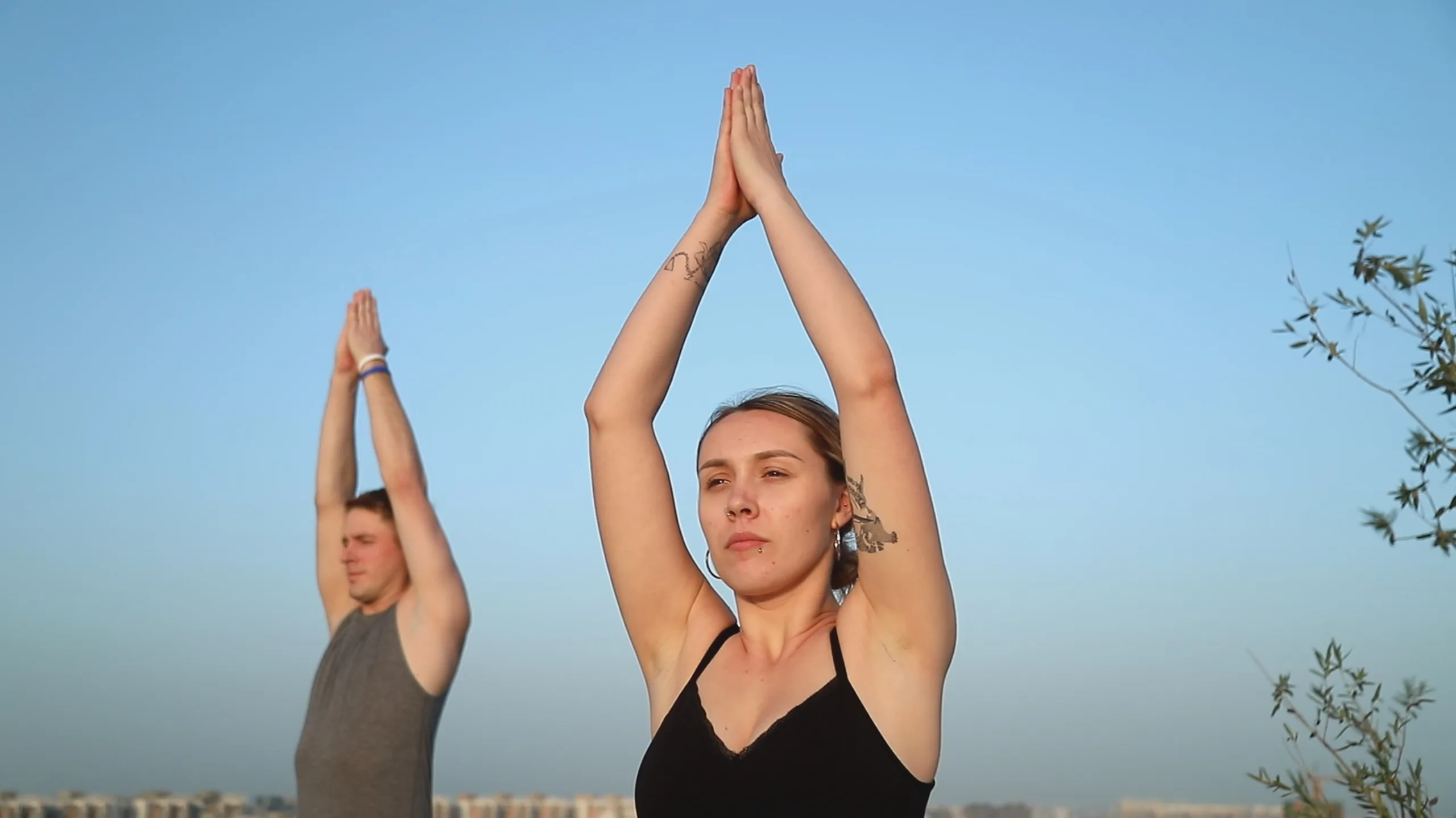
The study also showed that sports involving any kind of socialising have a bigger effect on mental health. So why not invite your partner or friends to join you? Start a group or join an existing one.
For physically inactive people, I always recommend starting with light exercise 3 days per week — or every second day — for 1 month. An average of 15–30 minutes per session. That can be biking, walking, carrying your child, cleaning the ceiling. After one month, increase either the frequency or the duration by 10–15%.
Exercise doesn’t have to be just exercise. It should be incorporated into your daily life — so that you don’t feel like you’re missing out on your normal activities.
Vil du vide mere?
Book en behandling og få personlig rådgivning om livsstil, bevægelse og sundhed.